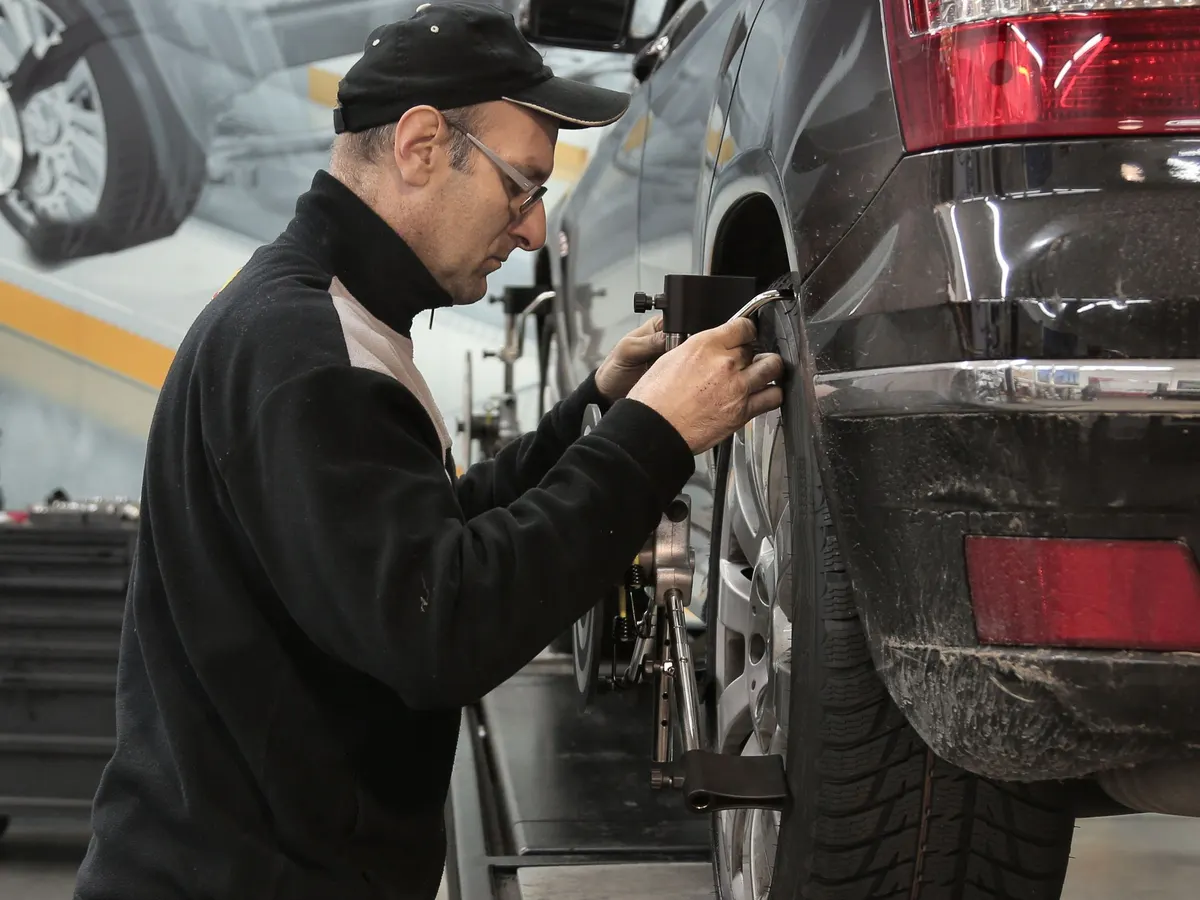
Wheel alignment basics: what it is and when you need one
What alignment adjusts, the warning signs and why it protects your tires.
Tires
Summer heat is hard on rubber, and a few five-minute checks go a long way toward preventing a roadside failure.
Tires are the only part of your car that touches the road, and they work hardest in summer. Hot pavement, long trips and heavy loads all push rubber closer to its limits. Most summer tire failures are not sudden surprises. They are the end of a slow problem that a quick check could have caught.
Air expands as it warms. A tire's pressure typically rises by about 1 psi for every 10°F increase in temperature, and driving adds more heat through friction and flexing. Pavement on a sunny day can be far hotter than the air above it. A tire that starts out under-inflated flexes more, generates more heat and wears faster, which is the combination that most often leads to a blowout.
Over-inflation causes problems too. A tire that is too firm has a smaller contact patch, grips less, wears down the center of the tread and takes impacts harder.
Check at least once a month, and before any long trip. If a tire loses more than a couple of psi in a few days, there is probably a slow leak that needs finding.
Tip: If your car has a tire pressure warning light, treat it as a final alert, not a monthly reminder. The light usually comes on only after pressure has dropped by around 25 percent.
Tread channels water away and give the tire grip. Summer storms can make hot roads slick, so worn tread is a risk even when the sun is shining.
Walk around the car once a month and look closely at each tire, including the inner sidewall if you can see it. Warning signs include:
Tires also age. Rubber hardens over time even if the tread looks fine, so ask for a check once a tire is about six years old. The four-digit date code on the sidewall shows the week and year it was made.
Heavier loads need correct inflation. Check the door jamb sticker or owner's manual for guidance when towing or carrying a full car. Sustained high speed raises tire temperature quickly, so slow down on long, hot highway stretches and take breaks. Rotating tires on the schedule in your manual helps every tire wear at an even rate.
If you find a bulge, a deep cut, or tread near the wear bars, replace the tire rather than gambling on a few more weeks. Our team at Northline checks tire condition as part of every maintenance visit, and you can always ask us to look at yours.
More from the blog
What alignment adjusts, the warning signs and why it protects your tires.
A short list of checks to complete before the school-year routine begins.
Want a second set of eyes?
Pressure, tread depth and sidewall condition, with clear findings and no pressure to buy anything.
Northline Assistant
Demo chatbot Automated replies